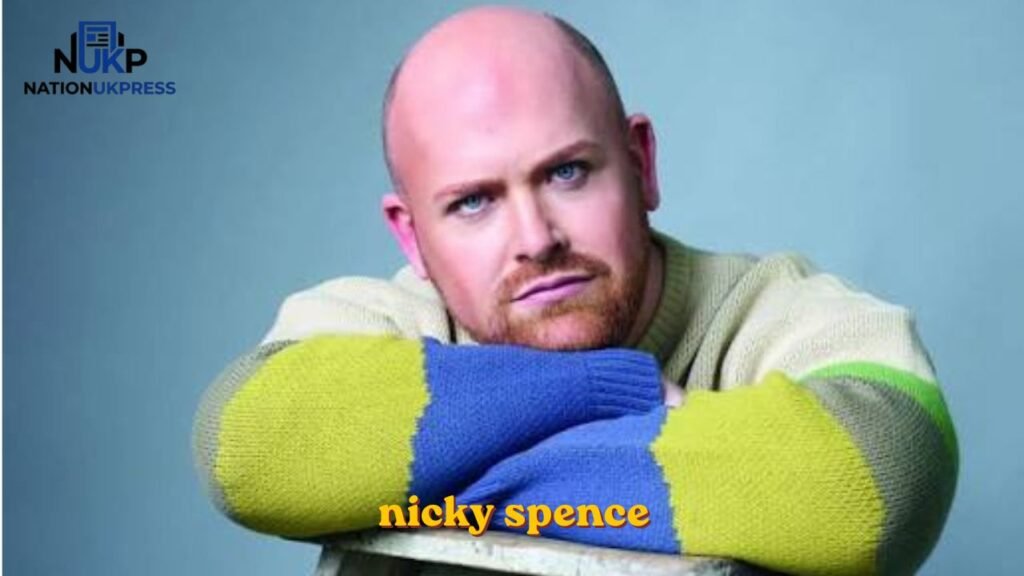

If you have searched for Nicky Spence tenor, you may already know that he is a highly regarded Scottish opera singer. But understanding why his career has attracted so much attention requires looking beyond a list of roles and awards. Nicky Spence has built a reputation as a tenor who combines vocal strength with dramatic intelligence, making him particularly effective in demanding operatic characters.
For people discovering him through opera, a natural question is what makes his voice distinctive and which productions best represent his work. Others are interested in his personal life, including the frequently searched question about Nicky Spence partner. There is also a broader curiosity about his development from a Scottish-trained singer into an artist appearing on major international stages.
This article brings those questions together in one place. It explains his training, career, important opera roles, recordings, artistic style, achievements and publicly known family life. It also looks at some less obvious aspects of his career that help explain why Nicky Spence has become such an interesting figure in modern opera.
Who Is Nicky Spence?
Nicky Spence is a Scottish operatic tenor known for performances in opera, concert repertoire and song recitals. Born in Scotland in 1983, he trained at the Guildhall School of Music & Drama and later at the National Opera Studio before developing his career through the English National Opera’s Harewood Artists programme.
His professional work has taken him well beyond Britain. He has appeared at major venues and opera companies including the Royal Opera House, Metropolitan Opera, Opéra national de Paris, Glyndebourne, Welsh National Opera, Deutsche Staatsoper Berlin and other international institutions.
What makes his career particularly interesting is its range. Spence has not restricted himself to one type of repertoire. His roles have included psychologically intense characters from Janáček, Wagner, Britten and other composers, while his concert and recital work demonstrates a different side of his musicianship.
The result is an artist whose career cannot easily be reduced to the description “opera tenor.”
Nicky Spence as a Tenor
A tenor is generally the highest male voice used in traditional operatic classification, but that simple definition does not explain the demands placed on a professional tenor.
For someone like Nicky Spence, singing an entire opera involves considerably more than producing high notes. The singer must combine:
- Vocal projection
- Clear diction
- Dramatic acting
- Musical accuracy
- Stamina
- Language skills
- Emotional interpretation
- The ability to work with conductors and directors
Spence has developed a reputation for combining these elements. His professional biographies repeatedly emphasize his abilities as a singing actor as well as his musicianship.
That distinction matters.
A technically impressive voice can still struggle to make a character convincing. In contrast, an effective singing actor makes the audience understand what the character is experiencing even when the words are unfamiliar.
This is one reason Spence has become particularly associated with complex twentieth-century and modern operatic repertoire.
Nicky Spence and Opera
Nicky Spence’s opera career covers an unusually broad range of composers and styles.
Among his notable roles are Peter Grimes in Benjamin Britten’s opera, Laca in Janáček’s Jenůfa, Boris in Káťa Kabanová, Albert Gregor in Věc Makropulos, Siegmund in Wagner’s Die Walküre and Erik in Der fliegende Holländer.
He has also performed in productions of works such as Wozzeck, Tristan und Isolde, Moses und Aron, The Exterminating Angel and The Nose.
This repertoire tells us something important about his artistic direction.
Rather than building his identity exclusively around the most famous romantic tenor roles, Spence has frequently taken on characters requiring psychological depth, unusual vocal colors and strong dramatic commitment.
That has helped distinguish him within a crowded international field of tenor singers.
Why Janáček Is Important to His Career
One of the most revealing areas of Nicky Spence’s work is his connection with Czech composer Leoš Janáček.
Janáček’s music can be difficult for singers because its dramatic power depends heavily on language, rhythm and speech-like musical patterns. The performer cannot simply rely on beautiful sustained singing.
Spence has repeatedly explored this repertoire, including works such as Jenůfa, Káťa Kabanová and Věc Makropulos.
His recording of Janáček’s The Diary of One Who Disappeared, made with pianist Julius Drake and mezzo-soprano Václava Housková, became one of the important recordings of his career. The recording received both the BBC Music Magazine Vocal Award and Gramophone’s Solo Vocal Award.
For a listener who wants to understand what makes Spence different, this repertoire is particularly useful.
It shows that his approach is not simply about vocal power. He can use language, dramatic timing and changes in vocal intensity to create a character.
His Major Opera Roles
Several roles stand out when looking at the development of his career.
Peter Grimes
Britten’s Peter Grimes is one of the most demanding tenor roles in twentieth-century opera. The character is isolated, emotionally complicated and increasingly trapped by the society around him.
Spence has taken the title role for Welsh National Opera, giving him the opportunity to combine vocal intensity with psychological acting.
The role is particularly demanding because the singer must sustain a large amount of dramatic tension rather than simply sing isolated spectacular moments.
Laca in Jenůfa
Laca is another role that demonstrates Spence’s interest in emotionally complicated characters.
In Janáček’s Jenůfa, relationships, jealousy and emotional desperation drive the drama. The character requires a singer who can communicate vulnerability as well as strength.
Spence has performed Laca at the Royal Opera House, adding an important Janáček role to his repertoire.
Siegmund in Die Walküre
Wagner demands enormous stamina from his singers, and Siegmund is one of the major tenor roles in Die Walküre.
Spence has performed Siegmund for the English National Opera. This role demonstrates another side of his abilities because Wagner requires sustained vocal projection across long scenes and a different type of dramatic concentration from Janáček.
Boris in Káťa Kabanová
His work as Boris further illustrates his connection with Janáček.
The role is not simply about vocal beauty. The opera’s emotional world is built around repression, desire and social pressure, making dramatic interpretation essential.
What Makes Nicky Spence Different From a Traditional Opera Tenor?
It would be easy to assume that a successful tenor must primarily be a powerful singer capable of reaching difficult high notes.
Spence’s career suggests a more complicated picture.
His strongest advantage is arguably the combination of singing and acting.
His work frequently involves characters who are psychologically damaged, conflicted, isolated or emotionally unstable. These roles require the audience to believe in the person behind the voice.
There is also an interesting balance between heroic and intimate singing in his work.
He can perform demanding Wagnerian repertoire, but he is equally comfortable with song recitals where subtle diction and emotional detail matter more than sheer volume.
That versatility is one of the less obvious reasons his career has developed internationally.
Nicky Spence Partner: Who Is He Married To?
The question “Who is Nicky Spence’s partner?” appears frequently in searches about the tenor.
Nicky Spence is married to pianist Dylan Perez. The couple married on 1 January 2022.
Perez is also a musician, making their relationship particularly relevant to people interested in Spence’s artistic life. Having a professional musician as a partner can provide a different understanding of the pressures associated with rehearsals, performances, travel and the irregular schedule of an international classical music career.
Spence has also spoken publicly about family life and, more recently, has discussed balancing his demanding professional career with life at home.
His personal life is considerably less public than his professional career, so it is useful to distinguish confirmed information from speculation.
Nicky Spence and Family Life
Despite performing internationally, Spence has maintained strong connections with Scotland.
Recent coverage has described him as living in Renfrewshire with his husband and young son. He has also spoken about the importance of bringing his child up with a connection to Scottish culture.
This provides an interesting contrast with his international career.
One week an opera singer may be working with a major orchestra or opera company abroad; another part of life is centered on family and home.
That balance is especially significant for an opera performer because international singing careers involve substantial travel, rehearsals and periods away from home.
His Training and Early Career
Spence’s development was not an overnight success.
He received formative experience through youth theatre and musical theatre before studying at the Guildhall School of Music & Drama. He subsequently continued his professional preparation at the National Opera Studio.
The English National Opera’s Harewood Artists programme became another important stage in his development.
The value of such programmes is easy to underestimate. Young singers do not simply need vocal lessons. They need opportunities to learn how professional productions actually operate.
They must become comfortable with:
- Rehearsal processes
- Working with directors
- Performing with orchestras
- Learning new roles
- Handling different languages
- Maintaining vocal health
- Performing under pressure
Spence’s career shows how this combination of training and stage experience can eventually lead to major international opportunities.
Awards and Recognition
Nicky Spence has received significant recognition during his career.
Among his achievements are the BBC Music Magazine Vocal Award and Gramophone’s Solo Vocal Award for his work on The Diary of One Who Disappeared.
He was also named BBC Music Magazine’s Personality of the Year in 2022.
In 2023, he was appointed an Officer of the Order of the British Empire, or OBE, in the King’s Birthday Honours.
He later received the Royal Philharmonic Society Singer Award in 2024, as well as the Janáček Memorial Medal from the Janáček Festival in Brno.
These awards are useful indicators of how his reputation has expanded beyond individual opera productions.
Nicky Spence as a Recording Artist
Recordings are an important part of Spence’s career because they allow listeners to experience his work outside the theatre.
His discography includes repertoire ranging from Janáček and French song to English music and twentieth-century works.
His recording of The Diary of One Who Disappeared is perhaps the clearest starting point for listeners interested in his artistry.
What makes the recording particularly revealing is that it demonstrates how effective he can be without the visual scale of a full opera production.
The listener has to rely almost entirely on voice, diction, musical phrasing and dramatic imagination.
That makes recordings a useful way of understanding his technique.
His Work Beyond Opera
Calling Nicky Spence only an opera singer would leave out a substantial part of his work.
He is also an active recitalist and concert performer.
He has appeared at Wigmore Hall and other major recital venues, while his concert repertoire has included major orchestral and choral works.
This distinction matters because opera and recital singing require different skills.
In opera, the singer works within a dramatic production involving costumes, scenery, movement, fellow performers and an orchestra.
In a recital, there may be little more than a singer and pianist on stage.
Every word and musical decision therefore becomes much more exposed.
Spence’s success in both areas demonstrates the breadth of his musicianship.
A Less Obvious Side of His Career
One interesting aspect of Spence’s career is his involvement in supporting the wider musical profession.
He has been involved with organisations connected with musicians and has taken on leadership and advocacy responsibilities. He has also worked to support community opera and emerging musical talent.
This is significant because professional opera careers can sometimes appear to exist in a separate world from everyday music education.
Spence has instead used his position to discuss wider issues affecting performers and the future of opera.
His public comments about the health of opera in Britain show that he is not simply concerned with his own next role.
Three Things Many Nicky Spence Profiles Miss
His repertoire choices reveal his priorities
Looking at the names of his roles reveals a pattern.
Spence repeatedly chooses characters where psychological complexity matters. Janáček, Britten and other twentieth-century composers are therefore not random additions to his repertoire.
They fit an artistic identity centered on storytelling.
His career is built on versatility rather than one signature role
Some singers become strongly associated with one character or one composer.
Spence has avoided that limitation.
His repertoire moves between Wagner, Britten, Janáček, contemporary opera, song and concert repertoire. That flexibility makes his career more sustainable because his identity is not dependent on one particular type of role.
His Scottish identity remains part of his professional story
Although he works internationally, Scotland continues to be an important part of how Spence describes himself.
That combination of Scottish roots and international opera work is one of the more distinctive elements of his career.
What Can New Opera Listeners Learn From Nicky Spence?
If you are new to opera, Nicky Spence is actually a useful singer through whom to explore the art form.
Instead of starting with the assumption that opera is simply about “big voices,” listen for three things.
First, pay attention to diction. Notice how the singer communicates character through individual words.
Second, listen to changes in vocal color. A singer does not need to sing loudly to create dramatic intensity.
Third, consider the character’s emotional situation. Opera becomes much easier to understand when you stop treating it as a collection of difficult musical sounds and start following the story.
Spence’s repertoire is particularly helpful for this because many of his roles involve recognizable human conflicts such as love, jealousy, isolation, fear and ambition.
Common Misunderstandings About Nicky Spence
One common mistake is to describe him simply as a “young tenor.” He began his professional career years ago and is now an established international artist with substantial experience.
Another mistake is to judge his singing only by high notes.
Professional tenor singing involves much more than range. Breath control, stamina, diction, dramatic interpretation and musical intelligence can be just as important.
It is also important not to confuse publicly confirmed information about his personal life with online speculation. His marriage to pianist Dylan Perez is established, while many details about their private life are not publicly documented and should not be treated as fact.
FAQ
Who is Nicky Spence?
Nicky Spence is a Scottish operatic tenor who performs internationally in opera, concerts and recitals. He has appeared with major organisations including the Royal Opera House, Metropolitan Opera and Opéra national de Paris. His repertoire includes works by Janáček, Wagner, Britten and other composers.
Is Nicky Spence a tenor or baritone?
Nicky Spence is a tenor. His repertoire includes demanding tenor roles such as Peter Grimes, Siegmund, Laca and Boris, demonstrating his ability to work across both dramatic and lyrical areas of tenor repertoire.
Who is Nicky Spence’s partner?
Nicky Spence is married to pianist Dylan Perez. The couple married on 1 January 2022. Perez is also a professional musician, making them a couple with a shared understanding of the demands of a performing career.
What opera is Nicky Spence famous for?
There is no single opera that defines his entire career. He is particularly associated with roles in works such as Janáček’s Jenůfa, Káťa Kabanová and Věc Makropulos, as well as Britten’s Peter Grimes and Wagner’s Die Walküre.
Where did Nicky Spence train?
Spence trained at the Guildhall School of Music & Drama and the National Opera Studio. He also developed professionally through the English National Opera’s Harewood Artists programme.
What awards has Nicky Spence won?
His honours include the BBC Music Magazine Vocal Award, Gramophone’s Solo Vocal Award, BBC Music Magazine’s Personality of the Year, the RPS Singer Award and the Janáček Memorial Medal. He was also appointed an OBE in the 2023 King’s Birthday Honours.
Conclusion
Nicky Spence’s career is interesting because it combines several sides of classical singing that are often discussed separately. He is a Scottish tenor, an international opera performer, a recitalist, a recording artist and an advocate for the wider musical profession.
His work in Janáček’s operas has become an important part of his identity, but his repertoire extends much further into Wagner, Britten, contemporary opera and concert music. His marriage to pianist Dylan Perez also connects his personal life with the world of professional music, although much of their private life remains appropriately private.
For anyone discovering Nicky Spence opera performances for the first time, the best way to understand his appeal is to look beyond vocal range. His real strength lies in combining a powerful tenor voice with language, acting and psychological detail.
That combination explains why he has progressed from specialist training in Britain to some of the world’s leading opera stages, while continuing to build a career that is as much about artistic depth as it is about vocal achievement.