
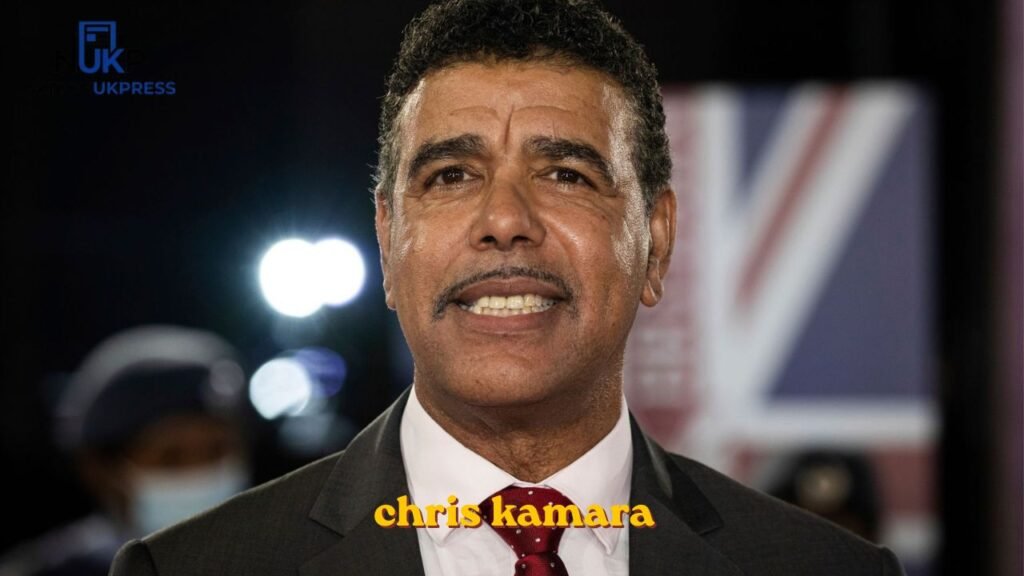

Chris Kamara is one of the most recognisable personalities in British football, famous not only for his long career as a player and manager but also for his energetic television reports and unforgettable “Unbelievable Jeff!” catchphrase. For many fans, however, a very different side of Kamara’s life became important when his speech suddenly began to change.
People who had watched him for years noticed that his reports became slower, his words sometimes became difficult to understand, and his normally effortless delivery was no longer the same. Naturally, this led to questions about Chris Kamara’s illness, what had happened to his speech and whether he had suffered a stroke or developed dementia.
The reality was different. Kamara was diagnosed with an underactive thyroid and later with apraxia of speech, a neurological condition affecting the brain’s ability to plan and coordinate the movements required for speaking. His experience was particularly difficult because he initially kept much of it private, even from his wife and family.
Today, his story is less about a sudden disappearance from football and more about adaptation, treatment, family support and learning to live confidently with a condition that changed one of the things he was best known for: his voice.
Who is Chris Kamara?
Chris Kamara, often affectionately called “Kammy”, was born in Middlesbrough, England, on 25 December 1957. He built a lengthy professional football career before becoming a manager and then one of Britain’s best-known football broadcasters.
His playing career included spells with several English clubs, including Portsmouth, Swindon Town, Brentford, Stoke City, Leeds United, Luton Town, Sheffield United, Middlesbrough and Bradford City. His own official biography says he played more than 650 games during his football career.
After his playing days, Kamara moved into management and later television. His personality made him particularly successful as a broadcaster because he did not sound like a traditional, overly formal football commentator.
His reports were energetic, spontaneous and often hilarious.
That personality became strongly associated with Soccer Saturday, where his excited match reports and famous catchphrase helped make him a fan favourite.
His broadcasting career eventually became much more challenging when he began experiencing serious problems with his speech.
What happened to Chris Kamara?
The question “what happened to Chris Kamara?” became increasingly common after viewers noticed changes in the way he spoke on television.
The problems were not simply ordinary ageing or nervousness.
Kamara began experiencing episodes in which his voice became croaky and his speech became difficult. He also struggled to put words together as naturally as he once had. At times, he described feeling as though his brain was not making the normal connections needed to produce speech. He also experienced balance problems and other physical difficulties.
This was especially frightening because speaking had been central to his professional identity.
For decades, Kamara could watch a football match and immediately explain what was happening. His ability to communicate quickly was part of what made his reports entertaining.
Suddenly, something that had once required almost no conscious effort became difficult.
One of the less obvious aspects of his experience was how hard it was for him to explain the problem to other people. He initially tried to hide his symptoms and keep his reports short when his speech was particularly difficult.
That meant some viewers could see that something was wrong before Kamara was comfortable talking openly about it.
What illness does Chris Kamara have?
Chris Kamara has spoken publicly about two important health issues: an underactive thyroid and apraxia of speech.
The thyroid problem was diagnosed after he had experienced symptoms including brain fog. He later explained that he had spent a long period struggling with his health before receiving the thyroid diagnosis.
The second major diagnosis was apraxia of speech.
It is important to distinguish the two conditions rather than treating them as one illness.
Underactive thyroid
An underactive thyroid, also called hypothyroidism, occurs when the thyroid gland does not produce enough thyroid hormones.
Those hormones influence many functions throughout the body. When thyroid hormone levels are too low, people can experience symptoms such as tiredness, difficulty concentrating, low energy and other physical changes.
In Kamara’s case, the thyroid problem was an important part of the medical investigation into what he was experiencing.
Apraxia of speech
Apraxia of speech is different.
It is a neurological speech disorder in which a person knows what they want to say but has difficulty planning and coordinating the precise movements required to produce the sounds correctly.
That distinction explains why someone with apraxia can know exactly what they want to communicate but still struggle to say it.
Kamara’s experience demonstrated how confusing this can be. His knowledge of football had not disappeared. His personality had not disappeared. His understanding of a match had not disappeared.
The problem was the process of turning thoughts into fluent spoken words.
That is why describing the condition simply as “slurred speech” does not tell the whole story.
Why did Chris Kamara’s speech change?
Kamara’s speech became slower and less predictable because of his apraxia.
He described periods when his voice sounded very different and when he struggled to produce concise reports. The Guardian reported that he sometimes experienced a terrible croak and difficulty connecting the words he intended to say.
This was particularly noticeable during football broadcasts.
A normal television report demands several abilities at once:
- Listening and processing information quickly
- Remembering important details
- Choosing words rapidly
- Speaking clearly
- Responding spontaneously
- Maintaining confidence in front of an audience
For someone whose speech planning has become difficult, this combination can be exhausting.
Kamara’s situation therefore illustrates an important point that is often missed when people discuss speech disorders: being unable to speak fluently does not necessarily mean that someone has lost their intelligence or understanding.
The thoughts can still be there.
The difficulty may be in expressing them.
Did Chris Kamara have a stroke?
There has been considerable speculation about whether Kamara suffered a stroke because of the way his speech changed.
However, his publicly discussed diagnosis was apraxia of speech, not a stroke.
He and his family were understandably concerned about serious neurological conditions. His wife Anne encouraged him to undergo medical assessment, including investigations related to dementia and Alzheimer’s disease. His brain scans were reportedly clear before a specialist assessment led to the apraxia diagnosis.
This is an important distinction.
Speech changes can have many possible causes, and a person should not try to diagnose themselves by comparing their symptoms with a celebrity’s experience.
Sudden speech difficulty, facial weakness, weakness on one side of the body or other acute neurological symptoms can require emergency medical attention.
Kamara’s story should therefore be viewed as an example of why persistent or unexplained speech changes deserve proper medical evaluation rather than assumptions.
When was Chris Kamara diagnosed with apraxia?
Kamara’s speech difficulties became publicly visible around 2020, and he subsequently received an apraxia of speech diagnosis.
Different reports have described the timeline slightly differently, partly because the symptoms developed over a prolonged period and his thyroid diagnosis and speech diagnosis were separate developments. Public accounts have consistently identified apraxia as the neurological speech condition behind his difficulties.
One particularly striking part of his story is that he initially kept the diagnosis largely to himself.
He later admitted that he had effectively suffered in silence for a long period.
That decision was understandable from a personal perspective but also made the experience harder.
Why did Chris Kamara keep his illness secret?
Kamara has been remarkably open about the emotional side of his illness.
He feared that people would feel sorry for him.
For someone who had built his public identity around confidence, humour and spontaneity, becoming visibly vulnerable on television was difficult. He also feared what the speech problems might mean for his future.
At one stage, he worried that he could have dementia or Alzheimer’s disease. The uncertainty made the situation even more frightening.
Another unusual aspect of his experience was his determination not to become defined by the condition.
He did not want viewers to see “the man with the speech disorder”.
He wanted to remain Chris Kamara.
That attitude helps explain why accepting the diagnosis became such an important part of his recovery process.
Chris Kamara’s speech and television career
Kamara’s speech problems had an obvious impact on his broadcasting work.
Football reporting had once been instinctive for him. He could watch a game, identify what had happened and communicate it almost immediately.
Apraxia interfered with that spontaneity.
He described the experience as deeply frustrating because something that had always come naturally suddenly required enormous effort. Reports that were once quick and polished became slower and harder to deliver.
Eventually, his changing circumstances contributed to his decision to leave his regular Sky Sports role.
However, leaving one broadcasting role did not mean that Kamara disappeared from public life.
He continued to work in television and other media projects, demonstrating that his career could evolve rather than simply end.
That is one of the most useful lessons from his experience: a communication disorder can change someone’s professional role without erasing their skills, personality or value.
Has Chris Kamara’s speech improved?
Yes, Kamara has spoken about improvement.
His recovery has not been presented as a simple overnight cure. Instead, he has discussed treatment, therapy, psychological acceptance and learning to manage the condition.
He has also spoken about how his speech improved significantly after he began accepting what had happened rather than constantly comparing his current voice with the way he used to speak.
This is one of the most interesting aspects of his story.
People often assume that improvement means returning exactly to the old version of yourself.
Kamara’s experience suggests something more realistic: improvement can also mean becoming comfortable with a changed situation and finding effective ways to communicate.
His confidence became part of that process.
Who is Chris Kamara’s wife?
Chris Kamara’s wife is Anne Kamara.
The couple married on 29 May 1982 and have two sons, Ben and Jack. They have been associated with family life in Wakefield, West Yorkshire, where they have lived since 1990.
Anne has been an important figure in Kamara’s story, particularly during the period when his health was changing.
Interestingly, Kamara has admitted that he initially kept the severity of his speech problems from her.
He later expressed regret about that decision.
His explanation was revealing: he had been trying to protect his family from worry, but in reality he was also depriving himself of the support they could have provided.
That is a valuable lesson for anyone dealing with a frightening health problem.
Keeping everything secret can feel like strength.
Sometimes asking the people closest to you for help is the stronger choice.
Chris Kamara’s family life
Kamara and Anne have two sons, Ben and Jack.
Both sons have their own families, and Kamara has spoken warmly about becoming a grandfather. In interviews, he has described how much his grandchildren mean to him and how important family remains in his life.
This family support became particularly meaningful during his health difficulties.
His story is therefore not simply about a television personality dealing with a medical diagnosis. It is also about a husband and father trying to understand a frightening change while continuing to maintain his normal life.
That personal context is easy to miss when the discussion focuses only on his speech.
What can we learn from Chris Kamara’s experience?
There are several less obvious lessons in Kamara’s story.
1. A speech problem does not mean a person has lost their intelligence
This is perhaps the most important point.
Someone may understand everything happening around them while struggling to communicate verbally.
Kamara’s football knowledge and sense of humour remained intact even when his speech became difficult.
2. Hiding symptoms can make an already difficult situation harder
Kamara spent a significant period trying to conceal what was happening.
He later acknowledged that he should have spoken to his wife and family earlier.
For people experiencing unexplained health changes, this is a practical lesson: getting professional advice and telling trusted people can reduce isolation.
3. Acceptance is not the same as giving up
Kamara’s story also challenges the idea that acceptance means surrender.
For him, accepting the condition helped him stop fighting the fact that his speech had changed. That allowed him to focus on treatment, therapy and communication instead of constantly worrying about sounding exactly as he had before.
This psychological shift may be one of the most important parts of his story.
Is Chris Kamara still involved in football?
Chris Kamara remains strongly associated with football even after stepping away from his regular Sky Sports presenting role.
His legacy is much bigger than one television programme.
He spent decades involved in professional football as a player, manager and broadcaster. His distinctive personality made him one of the most memorable football media figures of his generation.
Even after his speech difficulties became public, he continued appearing in television and media contexts rather than disappearing completely from the football world.
His story has therefore become one of adaptation rather than retirement from life.
Chris Kamara today
Chris Kamara’s public story has changed significantly since viewers first noticed his speech difficulties.
The focus is no longer simply on what he cannot do.
Instead, his experience has become an example of resilience and adaptation.
He has openly discussed his diagnosis, the fear surrounding it, the effect on his career and the importance of therapy and mental wellbeing.
His willingness to discuss the condition has also helped make conversations about speech disorders more visible.
For a man whose career depended so heavily on talking, losing confidence in his own voice could have been devastating.
Instead, Kamara gradually learned to work with the voice he had.
That may be the most powerful part of his story.
FAQ
What illness does Chris Kamara have?
Chris Kamara has spoken publicly about an underactive thyroid and apraxia of speech. His apraxia affected his ability to plan and coordinate speech, causing noticeable changes in his voice and delivery. He has also discussed the emotional and psychological impact of dealing with the condition.
What happened to Chris Kamara’s speech?
Kamara began experiencing significant problems with his speech, including a croaky voice, slower delivery and difficulty putting words together naturally. Medical investigations eventually led to a diagnosis of apraxia of speech. His speech has since improved, although he has acknowledged that it may sound different from the way it did earlier in his career.
Is Chris Kamara’s speech problem caused by dementia?
There is no public indication that Kamara was diagnosed with dementia. He was worried about dementia and Alzheimer’s disease when his symptoms first appeared, but investigations did not establish those conditions, and his speech difficulties were later associated with apraxia.
Who is Chris Kamara married to?
Chris Kamara is married to Anne Kamara. They married in 1982 and have two sons, Ben and Jack. Their long family life has remained an important part of Kamara’s personal story.
Did Chris Kamara leave television because of his illness?
His speech difficulties had a major impact on his broadcasting career, and he stepped away from his regular Sky Sports role. However, he did not completely disappear from television or public life and has continued to take part in media projects.
Has Chris Kamara recovered from apraxia?
Kamara has reported considerable improvement and has spoken positively about therapy and accepting his condition. However, it is more accurate to describe his experience as ongoing management and improvement rather than claiming that the condition was simply cured. His own accounts show that confidence and acceptance were important parts of his progress.
Conclusion
Chris Kamara’s illness changed something fundamental about his professional life: his ability to speak with the speed and spontaneity that had made him famous. But his story is not simply about losing a voice.
His experience with an underactive thyroid and apraxia of speech showed how frightening unexplained symptoms can be, particularly when they affect the very skill on which a career has been built. He initially kept his difficulties private, worried about what others would think and feared serious neurological disease. Eventually, diagnosis, treatment, therapy, family support and acceptance helped him move forward.
His wife Anne and his family have remained an important part of his personal life, while his long football career has given him a legacy that goes far beyond television.
Perhaps the most valuable lesson from Kamara’s story is that a changed ability does not have to mean a diminished person. His speech changed, but his humour, football knowledge, personality and connection with supporters remained.
That is why Chris Kamara’s story continues to resonate with people far beyond football.