
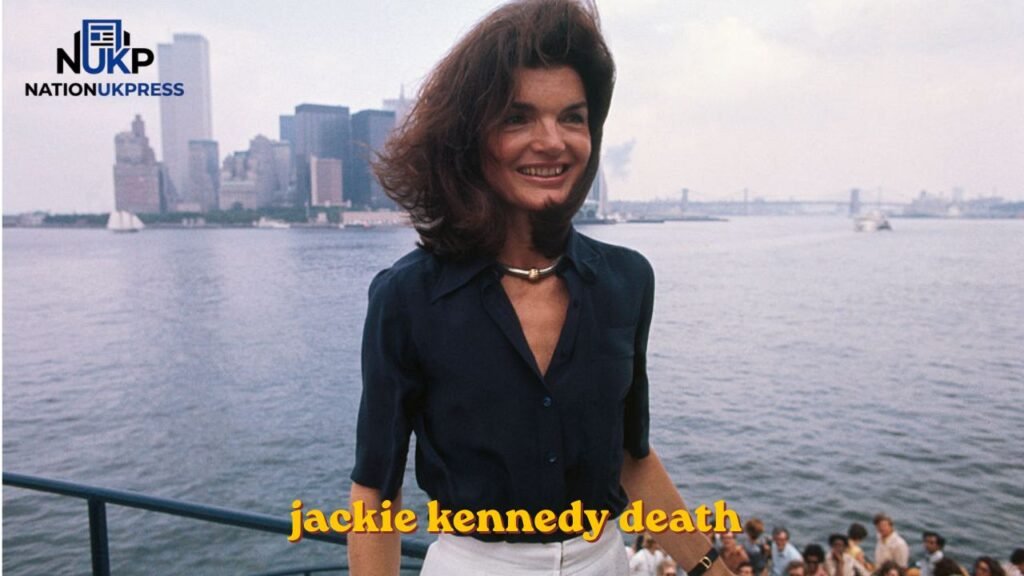

The story of Jackie Kennedy death continues to interest people decades after she passed away because her life represented far more than her role as America’s First Lady. From enduring the assassination of President John F. Kennedy to rebuilding her life as a respected book editor and cultural icon, Jacqueline Kennedy Onassis became one of the most admired women of the 20th century. Many people search for information about Jackie Kennedy’s death because they want to understand not only how she died, but also how her final years reflected the strength and grace she displayed throughout her life.
This guide answers the most common questions about Jackie Kennedy death cause, Jackie Kennedy death age, her official death announcement, and the lasting impact she left on American history. Along the way, you’ll also discover lesser-known facts about her final months, her family relationships, and why historians continue to study her remarkable resilience. Whether you’re researching American history or simply curious about one of the world’s most recognizable public figures, this article provides accurate, balanced, and easy-to-understand information.
Who Was Jackie Kennedy?
Jacqueline Lee Bouvier Kennedy Onassis, better known as Jackie Kennedy, was born on July 28, 1929, in Southampton, New York.
She became internationally famous after marrying John F. Kennedy in 1953. When JFK became President of the United States in 1961, Jackie became First Lady at just 31 years old.
She was admired for her:
- Intelligence
- Elegant fashion sense
- Passion for history and preservation
- Support of arts and culture
- Calm leadership during national tragedy
Even after leaving the White House, she built an independent career as a respected book editor in New York.
Jackie Kennedy Death at a Glance
| Fact | Information |
|---|---|
| Full Name | Jacqueline Lee Bouvier Kennedy Onassis |
| Date of Death | May 19, 1994 |
| Age at Death | 64 years old |
| Place of Death | New York City |
| Cause of Death | Non-Hodgkin lymphoma |
| Burial Place | Arlington National Cemetery |
Jackie Kennedy Death Cause
The official Jackie Kennedy death cause was non-Hodgkin lymphoma, a cancer that begins in the lymphatic system, which is part of the body’s immune system.
She received the diagnosis in January 1994.
Although treatments were available, the cancer progressed rapidly. Within only a few months, her condition worsened significantly.
Doctors eventually determined that additional treatment would not stop the disease.
Instead, Jackie chose to spend her remaining weeks surrounded by family and close friends.
She passed away peacefully at her Manhattan apartment on May 19, 1994.
What Is Non-Hodgkin Lymphoma?
Non-Hodgkin lymphoma is a type of blood cancer affecting white blood cells called lymphocytes.
Symptoms often include:
- Swollen lymph nodes
- Fatigue
- Fever
- Weight loss
- Night sweats
- Weakness
Because symptoms can resemble common illnesses, diagnosis is sometimes delayed.
By the early 1990s, treatments had improved considerably, but aggressive forms still carried a poor prognosis, especially in older adults.
Jackie Kennedy Death Age
Many people search for Jackie Kennedy death age.
She died at 64 years old.
Although many people still associate her with the youthful First Lady of the early 1960s, she spent more than three decades building a life beyond the White House.
Those years included:
- Raising Caroline and John Jr.
- Marriage to Aristotle Onassis
- Returning to work in publishing
- Supporting historic preservation projects
- Remaining active in New York cultural life
Her later accomplishments are often overshadowed by her years in the White House, but they formed a significant part of her legacy.
Jackie Kennedy Death Announcement
The Jackie Kennedy death announcement was released on May 19, 1994.
Her son, John F. Kennedy Jr., confirmed that his mother had died peacefully at home.
Political leaders, world figures, publishers, celebrities, and ordinary Americans expressed deep sadness.
President Bill Clinton praised Jackie for:
- Her dignity
- Her courage
- Her devotion to family
- Her commitment to preserving America’s history
Flags across the United States were lowered to half-staff in tribute.
Jackie Kennedy and the Death of JFK
One of the most searched topics is Jackie Kennedy death of JFK, referring to her role during President Kennedy’s assassination.
On November 22, 1963, Jackie was seated beside President John F. Kennedy in the presidential limousine in Dallas, Texas.
When the President was shot:
- Jackie remained beside him.
- She accompanied him to Parkland Hospital.
- She stayed with his body.
- She refused to change her bloodstained pink suit before returning to Washington.
Her decision became one of the most powerful symbols of national mourning.
She reportedly wanted the nation to understand the horror of what had happened.
How JFK’s Death Shaped the Rest of Her Life
The assassination changed Jackie forever.
In the years that followed, she:
- Became intensely protective of her children.
- Avoided unnecessary public attention.
- Focused on providing stability for her family.
- Carefully managed the Kennedy historical legacy.
Historians often note that Jackie transformed from a reluctant public figure into one of the nation’s most respected guardians of presidential history.
Jackie Kennedy’s Final Months
Jackie continued working as a book editor until shortly before her diagnosis.
Friends later recalled that she remained optimistic despite her illness.
During her final weeks she spent time with:
- Caroline Kennedy
- John F. Kennedy Jr.
- Close relatives
- Lifelong friends
She reportedly enjoyed reading, conversations with loved ones, and quiet moments at home.
Unlike many public figures, she chose privacy rather than extensive public appearances during her illness.
Her Funeral
Jackie Kennedy’s funeral reflected both simplicity and historical significance.
The funeral took place in New York before she was buried beside President Kennedy.
She was laid to rest at:
Arlington National Cemetery
Her gravesite sits beside:
- President John F. Kennedy
- Two of their infant children
- Later, Senator Robert F. Kennedy was buried nearby in a separate area.
Thousands visited Arlington to pay their respects in the days following her funeral.
Jackie Kennedy’s Lasting Legacy
Jackie’s influence extends far beyond politics.
She helped redefine the modern role of First Lady by emphasizing:
Historic Preservation
She played a central role in restoring the White House using historically accurate furnishings.
Many historians believe her efforts permanently changed how Americans view presidential history.
Cultural Leadership
She encouraged:
- Classical music
- Fine arts
- Literature
- Architecture
Her televised White House tour introduced millions of Americans to the importance of preserving national heritage.
Publishing Career
After public life, Jackie worked successfully as a book editor.
She helped publish books covering:
- History
- Art
- Politics
- Literature
This career demonstrated that she wished to be recognized for her own professional achievements rather than solely for her famous marriages.
Common Myths About Jackie Kennedy’s Death
Myth 1: She died from stress related to JFK’s assassination.
There is no medical evidence supporting this claim.
Her official cause of death was non-Hodgkin lymphoma.
Myth 2: She remained in politics after leaving the White House.
Not true.
She intentionally avoided political office and instead focused on publishing, family, and preservation work.
Myth 3: She disappeared completely from public life.
Although she valued privacy, Jackie remained active professionally and participated in selected cultural projects throughout her later years.
Unique Insights Often Overlooked
1. Her Career Was an Act of Independence
Many biographies emphasize Jackie as First Lady or widow, but her publishing career represented something deeper. By returning to work in her forties, she challenged expectations that prominent political spouses should remain defined by their past. Colleagues respected her editorial judgment rather than her fame, and authors frequently noted how thoroughly she prepared for manuscripts.
2. She Quietly Shaped Public Memory
Jackie understood that history is influenced not only by events but also by how those events are remembered. Her careful planning of President Kennedy’s funeral, preservation of White House artifacts, and support for historical projects helped establish lasting traditions that continue to influence how Americans commemorate presidents.
3. Her Privacy Set a New Standard
Long before conversations about celebrity privacy became common, Jackie deliberately controlled access to her personal life. Her approach influenced later public figures who sought to balance public responsibilities with private family life.
Why Jackie Kennedy Still Matters Today
Jackie Kennedy remains relevant because her life combined personal tragedy with remarkable resilience.
She demonstrated that public service can include:
- Preserving history
- Supporting culture
- Raising a family under extraordinary circumstances
- Reinventing oneself after loss
Her influence can still be seen in White House preservation efforts, historical education, and the evolving role of First Ladies.
FAQ
What was Jackie Kennedy’s cause of death?
Jackie Kennedy died from non-Hodgkin lymphoma, a cancer affecting the lymphatic system. She was diagnosed in January 1994, and the illness progressed quickly. She passed away peacefully at her New York home on May 19, 1994, surrounded by family.
How old was Jackie Kennedy when she died?
Jackie Kennedy was 64 years old when she died. Born on July 28, 1929, she spent her final decades working in publishing, raising her children, and supporting cultural preservation projects.
Where is Jackie Kennedy buried?
She is buried at Arlington National Cemetery in Virginia. Her grave is beside President John F. Kennedy and near the Eternal Flame, making it one of the cemetery’s most visited sites.
What did Jackie Kennedy do after JFK’s death?
After President Kennedy’s assassination, Jackie focused on raising Caroline and John Jr. She later married Aristotle Onassis and eventually established a respected career as a book editor, while continuing to advocate for historic preservation.
Was Jackie Kennedy with JFK when he died?
Yes. Jackie Kennedy was seated next to President Kennedy in the presidential limousine in Dallas on November 22, 1963. She remained with him throughout the immediate aftermath and accompanied his body back to Washington, D.C.
Why is Jackie Kennedy still remembered today?
Jackie Kennedy is remembered for her elegance, resilience, and contributions to American culture. Beyond serving as First Lady, she transformed White House preservation, supported the arts, built a successful publishing career, and became a symbol of dignity in the face of personal tragedy.
Conclusion
The story of Jackie Kennedy death is not only about the illness that ended her life but also about the extraordinary legacy she left behind. Her death at age 64 from non-Hodgkin lymphoma marked the close of a remarkable journey shaped by public service, profound personal loss, and quiet determination. While history often remembers her standing beside President John F. Kennedy during one of America’s darkest moments, her later achievements as a preservationist, editor, and cultural advocate deserve equal recognition. Understanding her final years provides a fuller picture of a woman whose influence extended well beyond the White House and continues to inspire people around the world.