
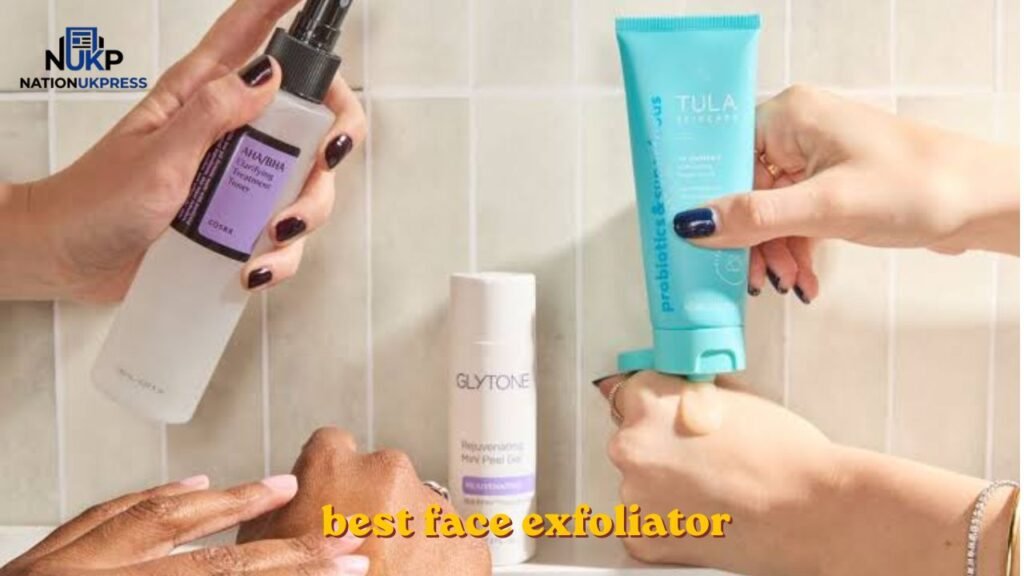

Many people buy a face exfoliator hoping for smoother, brighter skin, only to end up with redness, dryness, or irritation. The problem is rarely exfoliation itself — it is usually choosing the wrong type or using it too aggressively.
The best face exfoliator is not always the strongest scrub or the most expensive formula. It is the one that matches your skin’s needs, whether you are dealing with dullness, uneven texture, fine lines, sensitivity, or dryness.
Modern exfoliators come in many forms, from gentle chemical exfoliants with acids to traditional physical scrubs and enzyme-based formulas. Understanding how each works can help you avoid common mistakes and create a routine that improves your skin instead of damaging its protective barrier.
This guide explains how to choose the right exfoliator for different skin concerns, including the best face exfoliator UK shoppers can consider, options for mature skin, sensitive skin, and dry skin, plus practical tips based on real skincare experiences.
What Does a Face Exfoliator Actually Do?
A face exfoliator removes dead skin cells that naturally build up on the surface of your skin. As this layer accumulates, it can make your complexion appear dull, rough, or uneven.
Regular but controlled exfoliation can help:
- Improve skin texture
- Make skin look brighter
- Reduce the appearance of clogged pores
- Help skincare products absorb more effectively
- Create a smoother base for makeup
- Support a healthier-looking complexion
However, exfoliation is about balance. Your skin already has a natural renewal process, so removing too much too often can weaken the skin barrier.
A good exfoliator should leave your skin feeling smooth and comfortable — not tight, burning, or overly dry.
Types of Face Exfoliators Explained
Choosing the right product starts with understanding the three main categories.
1. Chemical Exfoliators
Chemical exfoliators use ingredients such as acids or enzymes to loosen dead skin cells without physical rubbing.
Common types include:
AHAs (Alpha Hydroxy Acids)
AHAs work mainly on the skin surface.
Popular examples:
- Glycolic acid
- Lactic acid
- Mandelic acid
They are often useful for:
- Dry skin
- Uneven texture
- Dull complexion
- Mature skin concerns
Lactic acid is often preferred by people with dry or sensitive skin because it tends to be gentler than stronger acids.
BHAs (Beta Hydroxy Acids)
The most common BHA is salicylic acid.
Because it is oil-soluble, it can travel into pores and help remove excess oil and buildup.
It is often suitable for:
- Oily skin
- Congested pores
- Blackheads
- Breakout-prone skin
Enzyme Exfoliators
These use fruit-derived enzymes, such as papaya or pineapple enzymes, to dissolve dead skin cells.
They are often a good middle ground for people who find scrubs too harsh but want something more active than a basic cleanser.
2. Physical Face Exfoliators
Physical exfoliators contain small particles that manually remove dead skin through gentle rubbing.
Examples include:
- Sugar-based scrubs
- Powder exfoliants
- Cream scrubs with fine particles
They can work well when formulated properly, but the quality of particles matters.
A rough scrub used aggressively can create tiny irritation points, especially on sensitive skin.
A useful rule:
If you feel friction more than smoothness, you are probably exfoliating too hard.
3. Combination Exfoliators
Some products combine acids, enzymes, and gentle physical ingredients.
These can be effective but require caution because multiple exfoliating ingredients can increase the risk of irritation.
Beginners usually benefit from starting with one exfoliating approach rather than combining several.
Best Face Exfoliator for Different Skin Types
Best Face Exfoliator for Mature Skin
Mature skin often needs exfoliation, but it also needs protection.
As skin ages, natural cell turnover slows down, which can contribute to:
- Dull appearance
- Rough texture
- Fine lines looking more noticeable
- Uneven tone
The best face exfoliator for mature skin is usually a gentle chemical exfoliant.
Look for:
- Lactic acid
- Mandelic acid
- Low-strength glycolic acid
- Enzyme formulas
Why?
These ingredients can improve smoothness without creating unnecessary stress on aging skin.
Practical tip for mature skin:
Avoid the temptation to exfoliate more because your skin feels rough. Sometimes roughness is caused by dehydration rather than excess dead skin.
A hydrating routine with gentle exfoliation often produces better results than aggressive treatments.
Best Face Exfoliator for Sensitive Skin
Sensitive skin requires the most careful approach.
Signs your exfoliator may be too strong include:
- Stinging after application
- Persistent redness
- Tightness
- Flaking
- Increased sensitivity to other products
The best face exfoliator for sensitive skin is usually:
- A mild enzyme exfoliator
- A low concentration lactic acid product
- A gentle exfoliating powder used occasionally
Avoid:
- Large abrasive particles
- Daily exfoliation
- Multiple active acids together
A useful test:
Apply a new exfoliator once per week for several weeks before increasing frequency. Sensitive skin often reacts slowly, and irritation may appear after repeated use.
Best Face Exfoliator for Dry Skin
Dry skin often has a confusing problem: it can feel flaky but still be sensitive.
Many people respond by scrubbing harder, which removes surface flakes temporarily but damages moisture retention.
The best face exfoliator for dry skin usually includes:
- Lactic acid
- Hydrating ingredients
- Gentle enzymes
A good dry-skin exfoliation routine:
- Cleanse gently
- Apply exfoliator once or twice weekly
- Follow with a rich moisturiser
- Use sunscreen during the day
One overlooked insight:
Dry skin does not always need more exfoliation — sometimes it needs better hydration before exfoliation can work properly.
Best Face Exfoliator UK: What Should Shoppers Look For?
UK skincare shoppers often face different concerns depending on the season.
Cold weather, indoor heating, and changing humidity can affect the skin barrier, causing:
- Dry patches
- Sensitivity
- Dullness
When choosing the best face exfoliator UK consumers should consider:
During colder months:
Choose:
- Gentle acids
- Cream-based formulas
- Hydrating exfoliators
Avoid:
- Strong scrubs
- Frequent exfoliation
During warmer months:
You may prefer:
- Lightweight exfoliating liquids
- Salicylic acid products for congestion
- Occasional deeper exfoliation
Another practical consideration is simplicity. A product that fits naturally into your routine is more likely to deliver results than a complicated multi-step treatment.
How Often Should You Exfoliate Your Face?
There is no universal answer because skin tolerance varies.
A general guide:
Sensitive skin:
Once weekly or less
Dry skin:
Once or twice weekly
Normal skin:
One to three times weekly
Oily or congested skin:
Two to three times weekly depending on tolerance
More exfoliation does not automatically mean better skin.
The goal is consistent improvement, not constant peeling.
Common Face Exfoliation Mistakes to Avoid
1. Exfoliating Every Day
Daily exfoliation can weaken the skin barrier.
Possible results:
- Increased dryness
- Redness
- Sensitivity
- Breakouts caused by irritation
2. Using Too Many Active Ingredients
Combining:
- Exfoliating acids
- Retinol
- Strong vitamin C
- Acne treatments
can overwhelm the skin.
Introduce products gradually.
3. Scrubbing Too Hard
The pressure from your hands matters as much as the product.
A gentle application is usually more effective than aggressive rubbing.
4. Ignoring Moisturiser After Exfoliation
Exfoliation removes buildup, but your skin still needs support.
A moisturiser helps maintain the barrier and reduce irritation.
5. Forgetting Sunscreen
Freshly exfoliated skin may be more sensitive to sunlight.
Daily sunscreen is an important part of any exfoliation routine.
How to Choose the Right Face Exfoliator: Simple Decision Guide
Ask yourself these questions:
Is your skin dry and rough?
Choose:
- Lactic acid
- Enzyme exfoliators
- Hydrating formulas
Is your skin oily or congested?
Choose:
- Salicylic acid
- Lightweight chemical exfoliants
Is your skin sensitive?
Choose:
- Mild acids
- Enzyme products
- Less frequent use
Is your concern dullness or aging skin?
Choose:
- Gentle AHAs
- Lactic acid
- Mandelic acid
Unique Insights Most People Miss About Face Exfoliation
1. Skin texture problems are not always caused by dead skin
Many people exfoliate because their skin feels rough, but dehydration can create a similar feeling.
Before increasing exfoliation, improve hydration and barrier care.
2. Frequency matters more than strength
A gentle exfoliator used consistently often gives better long-term results than a powerful product used occasionally after irritation appears.
3. Your skin’s response is the best guide
Two people can use the same product and have completely different results.
Your skin’s comfort level is more important than following a fixed schedule.
FAQ
What is the best face exfoliator for sensitive skin?
The best face exfoliator for sensitive skin is usually a gentle enzyme exfoliator or a mild lactic acid formula. These options remove dead skin cells without aggressive scrubbing. Start slowly and monitor how your skin reacts.
How often should I use a face exfoliator?
Most people should exfoliate one to three times per week depending on their skin type. Sensitive and dry skin usually need less frequent exfoliation, while oily skin may tolerate more regular use.
What is the best face exfoliator for mature skin?
The best face exfoliator for mature skin is often a gentle chemical exfoliant containing ingredients like lactic acid or mandelic acid. These can improve texture while being kinder to aging skin.
Can exfoliating make dry skin worse?
Yes, over-exfoliating can make dry skin worse by damaging the protective barrier. Dry skin usually benefits from gentle exfoliation combined with nourishing moisturisers.
Are physical scrubs bad for your face?
Not necessarily. A well-formulated gentle scrub can work for some people, but harsh particles and aggressive rubbing can irritate sensitive or delicate skin.
Conclusion
The best face exfoliator is not the strongest formula — it is the one that works with your skin instead of against it.
Whether you need smoother texture, brighter skin, help with dryness, or a gentle option for sensitive or mature skin, the right exfoliator depends on your individual needs.
Start slowly, pay attention to how your skin responds, and remember that healthy skin comes from consistency rather than aggressive treatments. A balanced exfoliation routine can become one of the simplest ways to maintain a fresh, comfortable complexion.