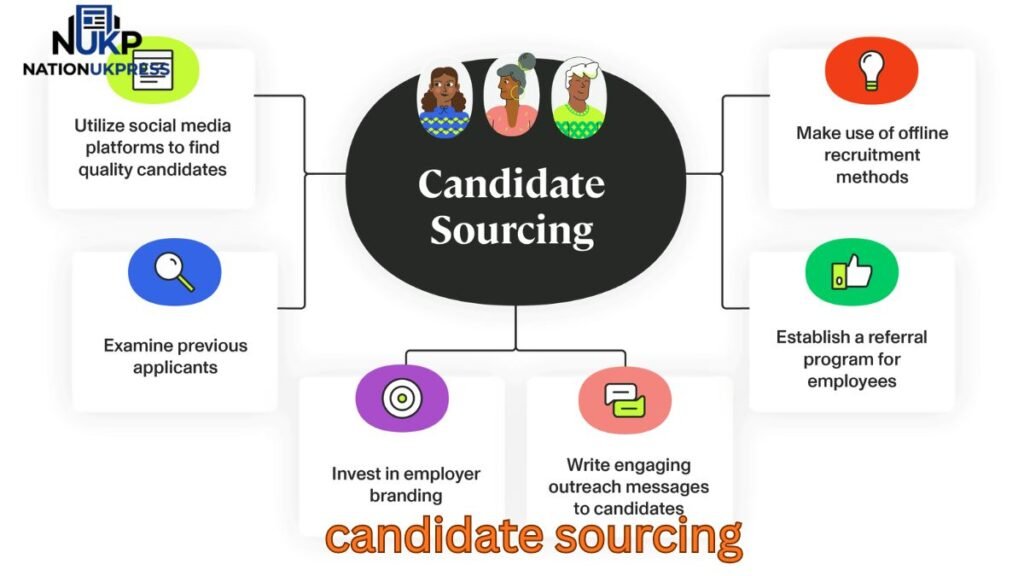

Candidate sourcing has become one of the most critical challenges in modern recruitment, especially as talent markets grow more competitive and specialized. Whether you’re a recruiter, HR manager, or founder building a team from scratch, finding the right people before your competitors do can determine the success of your entire organization. This is where candidate sourcing goes far beyond simply posting jobs and waiting for applications.
Today, hiring teams are expected to proactively identify, engage, and nurture talent across multiple platforms—often before candidates even start actively looking for new roles. With the rise of AI candidate sourcing, the process is evolving even faster, shifting from manual searching to intelligent, data-driven discovery.
In this article, you’ll learn how modern sourcing actually works in real hiring environments, which tools are worth using, and which strategies consistently deliver high-quality candidates. We’ll also break down practical workflows, common mistakes, and advanced techniques used by top-performing recruiters. The goal is simple: help you build a sourcing system that consistently brings in strong, relevant candidates—not just more noise.
What Candidate Sourcing Really Means Today
At its core, candidate sourcing is the proactive search for potential candidates before they apply for a job. But in real-world recruiting, it’s much more strategic than that.
Modern sourcing includes:
- Searching talent databases and professional networks
- Identifying passive candidates (not actively job hunting)
- Engaging talent through outreach and messaging
- Building long-term talent pipelines
- Using data and AI to predict job fit
Unlike traditional recruitment, sourcing focuses on finding people first, job matching second.
A key shift today is that sourcing is no longer a purely human task. Recruiters now rely heavily on candidate sourcing tools and AI systems to filter, rank, and recommend talent more efficiently.
AI Candidate Sourcing: How It Is Changing Hiring
AI candidate sourcing is transforming how recruiters discover talent by automating the most time-consuming parts of the process.
Instead of manually searching LinkedIn profiles or job boards, AI systems can:
- Analyze job descriptions and extract skill requirements
- Scan millions of profiles across platforms
- Rank candidates based on match probability
- Predict passive candidates likely to switch jobs
- Personalize outreach messages automatically
What makes AI sourcing powerful in practice
One of the most impactful changes is pattern recognition at scale. AI doesn’t just look for keywords—it identifies career paths, skill combinations, and behavioral signals.
For example:
A recruiter looking for a “data engineer with healthcare experience” can instantly surface candidates who worked in hospital systems—even if their job titles don’t explicitly mention “healthcare.”
Unique insight #1: AI reduces “search fatigue bias”
One overlooked benefit is that recruiters often suffer from “search fatigue bias”—where after reviewing too many profiles, they start narrowing criteria unconsciously. AI removes this bias by continuously surfacing diverse, relevant profiles you might otherwise ignore.
Candidate Sourcing Tools: What Actually Works
There are hundreds of candidate sourcing tools, but they generally fall into a few categories.
1. Talent Search Engines
These tools aggregate profiles from multiple platforms.
They help recruiters:
- Search across public resumes
- Filter by skills, experience, and location
- Identify passive candidates quickly
2. AI-Powered Sourcing Platforms
These are the most advanced systems today.
They typically offer:
- Automated candidate matching
- Predictive job fit scoring
- Outreach automation
- CRM-style talent pipelines
3. Chrome Extensions & Lightweight Tools
Used for fast sourcing on platforms like LinkedIn, GitHub, or job boards.
They allow:
- One-click profile saving
- Email extraction
- Quick tagging and tracking
4. Talent Databases & Resume Pools
These include large pre-built candidate repositories maintained by platforms or ATS systems.
They help recruiters:
- Access pre-screened candidates
- Reduce sourcing time
- Re-engage old applicants
Best Candidate Sourcing Tools in Practice
The best candidate sourcing tools are not always the biggest names—they are the ones that integrate into your workflow.
High-performing recruiters typically combine:
- An AI sourcing engine (for discovery)
- A CRM system (for pipeline management)
- A messaging tool (for outreach automation)
- A browser extension (for fast capture)
What separates good tools from great ones
A great sourcing tool should:
- Reduce manual search time by at least 50%
- Improve candidate response rates
- Integrate with ATS systems
- Provide skill-based matching (not just keyword search)
Unique insight #2: Tool overload reduces hiring speed
Many teams fail not because of bad tools—but because they use too many. Switching between systems slows down decision-making and leads to inconsistent candidate tracking. The best recruiting teams intentionally limit their stack to 3–4 core tools.
Candidate Sourcing Platforms: Where Talent Actually Lives
Modern candidate sourcing platforms go beyond job boards. They represent ecosystems where professionals actively or passively engage.
Key platforms include:
- Professional networking platforms
- Developer communities
- Design and creative portfolios
- Freelance marketplaces
- Industry-specific forums
Where recruiters often underestimate talent
Some of the strongest candidates are found in:
- Open-source contributions
- Technical communities and Git repositories
- Niche Slack or Discord groups
- Conference speaker lists
- Academic publication databases
These sources are often ignored in traditional recruiting but are goldmines for passive talent.
Candidate Sourcing Strategies That Actually Work
Strong sourcing is not about tools—it’s about strategy.
1. Build talent “intent maps”
Instead of just tracking skills, map candidate intent:
- Are they growing in their role?
- Have they recently changed jobs?
- Are they engaging with industry content?
This helps predict who is likely to move next.
2. Use layered sourcing (not single-channel search)
Top recruiters rarely rely on one platform. They combine:
- LinkedIn + GitHub + portfolio sites
- Job boards + referrals + communities
3. Personalize outreach based on context
Generic messages are ignored. High response rates come from:
- Referencing recent work
- Mentioning shared technical interests
- Highlighting career progression opportunities
4. Track sourcing conversion rates
Most teams measure applicants, not sourcing quality.
Better metrics include:
- Sourced → replied ratio
- Replied → interview ratio
- Interview → hire ratio
Unique insight #3: “Source-to-interview ratio” reveals recruiter skill
A low application count with high interview conversion is often better than high volume sourcing. This metric reveals whether you’re finding the right people—not just more people.
Common Mistakes in Candidate Sourcing
Even experienced recruiters fall into these traps:
1. Over-relying on job titles
Job titles vary widely across companies. A “software engineer” in one company may be a “backend developer” in another.
2. Ignoring passive signals
Candidates who engage with industry content or update portfolios are often more valuable than active job seekers.
3. Poor follow-up systems
Many sourcing efforts fail because there is no structured follow-up pipeline.
4. Treating sourcing as a one-time task
Effective sourcing is continuous, not reactive.
Advanced Candidate Sourcing Workflows
High-performing teams use structured workflows like:
- Define skill + intent profile
- Use AI sourcing tool for initial pool
- Manually refine shortlist
- Enrich candidate profiles (projects, history, activity)
- Run personalized outreach
- Track engagement and re-engage later
This creates a living talent pipeline, not a static database.
FAQ: Candidate Sourcing
What is candidate sourcing in recruitment?
Candidate sourcing is the proactive process of identifying and engaging potential job candidates before they apply. It focuses on building a pipeline of talent rather than waiting for applications.
What are the best candidate sourcing tools?
The best tools combine AI matching, talent databases, and outreach features. They reduce manual search time and help recruiters identify both active and passive candidates efficiently.
How does AI improve candidate sourcing?
AI improves sourcing by analyzing job requirements, scanning large datasets, and ranking candidates based on skill and fit. It also helps predict passive candidates who may be open to new opportunities.
What is the difference between sourcing and recruiting?
Sourcing is the process of finding and engaging candidates, while recruiting includes the full hiring process such as interviews, evaluation, and job offers.
What are common sourcing mistakes recruiters make?
Common mistakes include relying too much on job titles, ignoring passive candidates, and failing to maintain a structured follow-up system.
How can companies improve their sourcing strategy?
Companies can improve sourcing by using multiple channels, leveraging AI tools, tracking conversion metrics, and building long-term talent pipelines instead of one-time searches.
Conclusion
Candidate sourcing has evolved from manual searching into a strategic, data-driven discipline powered by AI and structured workflows. The most successful recruiters today don’t just search harder—they search smarter by combining technology, behavioral insights, and consistent pipeline management.
Whether you’re exploring AI candidate sourcing, evaluating candidate sourcing tools, or building long-term candidate sourcing strategies, the key is the same: focus on quality, intent, and process—not just volume.
The future of hiring belongs to teams that treat sourcing as a continuous system, not a reactive task.