
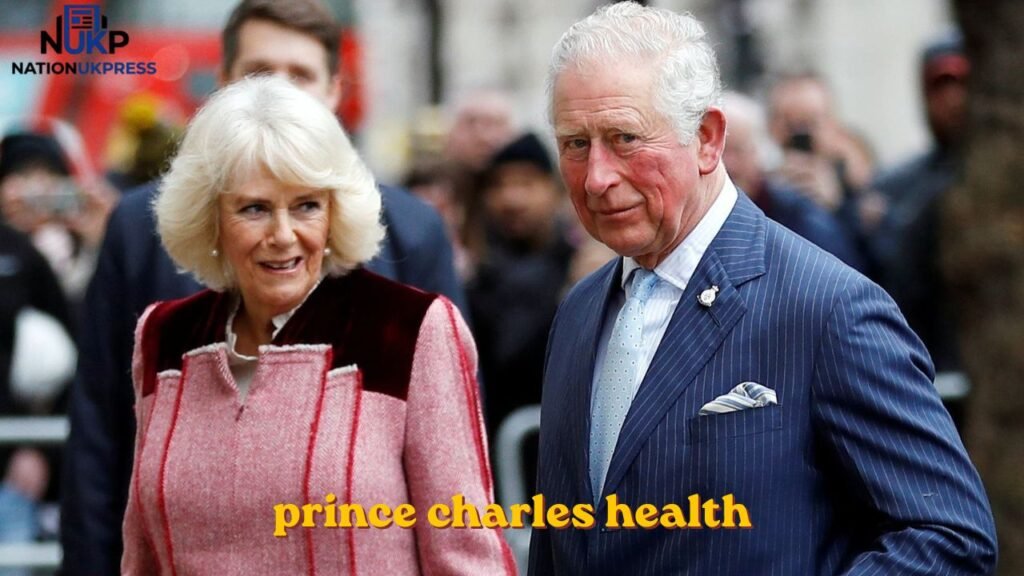

If you are searching for a Prince Charles health update, the most important thing to know is that Prince Charles is now King Charles III, and his health has been closely followed since Buckingham Palace announced his cancer diagnosis in February 2024. The palace has deliberately kept the exact type of cancer and detailed medical information private, so some claims circulating online go further than the confirmed facts.
As of August 2026, the overall picture is cautiously positive. King Charles is still receiving cancer treatment, but the treatment schedule has been reduced following what he described in late 2025 as good news linked to early diagnosis and effective intervention. More recently, reports have said his doctors are pleased with his progress, while the King has continued carrying out public engagements and official duties.
This article separates what is officially confirmed from speculation, explains what happened to his health, and answers the questions people most commonly ask about his condition today.
What is the latest Prince Charles health update?
The latest reliable picture is that King Charles remains under cancer treatment, but his condition has been progressing in a positive direction.
In December 2025, Charles announced that his cancer treatment schedule could be reduced in the new year. He attributed the development to early diagnosis, effective intervention and following medical advice. Buckingham Palace described his care as moving toward a more precautionary phase rather than suggesting that treatment had simply ended.
That distinction matters.
A reduction in treatment does not automatically mean that someone is cured or in remission. Cancer treatment can continue at a lower frequency for monitoring, prevention of recurrence or other medical reasons. In Charles’s case, Buckingham Palace has not publicly described him as cancer-free.
More recent reporting in August 2026 has indicated that his doctors are pleased with his progress. Charles has also maintained a substantial public schedule during 2026, although royal duties naturally fluctuate with the calendar and his medical needs.
Is King Charles still receiving cancer treatment?
Yes, according to the latest reporting, King Charles continues to receive cancer treatment.
Queen Camilla said on August 19, 2026, that Charles was still undergoing treatment, while also explaining that his treatment had been scaled back following early detection and effective intervention.
The exact medication, treatment regimen, frequency and medical results have not been publicly disclosed.
That privacy is important when assessing online claims. A photograph showing Charles looking energetic cannot establish what is happening medically, just as a quieter period in his diary does not necessarily indicate a health deterioration.
What health problems has King Charles had?
There have been two major health developments that became public in 2024.
1. Enlarged prostate
In January 2024, Charles was treated in hospital for benign prostate enlargement.
“Benign” means the prostate condition was not cancerous. Buckingham Palace subsequently made clear that the cancer discovered during the medical process was a separate issue.
This distinction is frequently misunderstood online.
Charles did not announce that he had prostate cancer. Buckingham Palace specifically confirmed that the cancer diagnosed afterward was not prostate cancer.
2. An unspecified form of cancer
On February 5, 2024, Buckingham Palace announced that diagnostic tests had identified a form of cancer following his treatment for the enlarged prostate.
The palace did not identify the type or stage of cancer. It also did not provide a prognosis. Charles immediately began a schedule of regular treatment and temporarily postponed public-facing duties on medical advice.
That remains the basic medical information officially available.
What type of cancer does King Charles have?
The exact type of cancer has not been publicly disclosed.
This is one of the most important points to remember when searching for “Prince Charles health issues” or “King Charles cancer type.”
Buckingham Palace confirmed in 2024 that the cancer was not prostate cancer, but it did not identify the organ involved, cancer subtype or stage.
Consequently, articles or social-media posts claiming to know the precise cancer type should be treated carefully unless they are reporting a new, attributable statement from the palace or Charles’s medical team.
There is another reason this matters: different cancers have very different treatment pathways. It would be medically irresponsible to infer Charles’s diagnosis simply from the fact that he continues treatment or appears well in public.
How is Prince Charles’s health now?
Based on publicly available information, his health appears considerably more stable than it did immediately after his diagnosis.
There are several indicators behind that assessment:
- His cancer treatment has been reduced.
- He has continued public engagements.
- His doctors have reportedly been pleased with his progress.
- He has continued official work during 2026.
- His public schedule has included engagements connected to cancer research and treatment.
In May 2026, for example, Charles visited Guy’s Cancer Centre in London, where he met cancer patients, clinicians and researchers and learned about research involving AI, robotics and personalised treatment.
That engagement does not prove anything specific about his own medical results. However, it does demonstrate that he has remained sufficiently active to undertake demanding public duties.
Why did Charles return to public duties so quickly after his diagnosis?
One interesting aspect of Charles’s health journey is that he did not completely withdraw from constitutional and official responsibilities after his diagnosis.
When Buckingham Palace announced the cancer in February 2024, doctors advised him to postpone public-facing engagements. However, the palace said he would continue state business and official paperwork privately.
By April 2024, doctors were sufficiently satisfied with his condition for him to resume public-facing work. His first major engagement included a visit to a cancer treatment centre, where he met patients and medical professionals.
This provides a useful real-world lesson about cancer treatment: being treated for cancer does not necessarily mean a person is unable to work or participate in ordinary activities.
Treatment affects individuals differently. Some people can maintain demanding schedules, while others need substantial rest. The King’s public schedule therefore should not be used as a universal comparison for anyone else’s cancer experience.
What did King Charles say about his cancer recovery?
Charles has generally presented his experience in a practical and positive way rather than providing detailed medical information.
His most significant public health update came in December 2025, when he said that his treatment could be reduced because of early diagnosis and effective intervention. He described the development as a major personal milestone.
The message also highlighted something broader than the royal family’s health: the value of detecting cancer early.
That point is particularly significant because Charles has used his own experience to encourage greater awareness of cancer screening and early diagnosis.
A less obvious detail: his prostate treatment helped reveal the cancer
One of the most unusual parts of the story is that the cancer was discovered during an unrelated medical episode.
Charles originally entered hospital for treatment of an enlarged prostate. During that process, doctors identified another issue that required investigation. Subsequent diagnostic tests led to the cancer diagnosis.
This is an important distinction between screening, incidental detection and investigation of symptoms.
The cancer was not publicly described as something doctors were initially looking for during a routine cancer screening programme. Instead, an unrelated medical procedure led to further investigation.
That sequence also explains why the palace emphasised the importance of swift medical intervention.
Another overlooked insight: treatment reduction is not the same as remission
Headlines about Charles’s “recovery” can easily create the impression that his cancer has disappeared.
The publicly available information does not establish that.
When cancer treatment is reduced, several possibilities can exist depending on the disease and treatment plan. Doctors may reduce treatment because the cancer is responding, because the planned course has reached a different stage, or because treatment is moving into a monitoring or precautionary phase.
Charles’s situation has been described as moving into a more precautionary phase, but the palace has not publicly announced that he is cured or in remission.
Therefore, the safest summary is:
King Charles’s cancer treatment has been reduced because his response has been positive, but he remains under medical care.
Does King Charles look healthy in recent appearances?
Recent public appearances have shown Charles continuing to work and participate in events.
That can understandably reassure members of the public, but appearance alone is not a medical test.
A person undergoing cancer treatment can look energetic while still receiving regular therapy. Conversely, someone may look tired on a particular day without experiencing a serious deterioration.
This is particularly relevant when evaluating celebrity and royal health stories. Photographs, body language and short public appearances can provide context, but they cannot establish a diagnosis, treatment response or prognosis.
For Charles, the more meaningful information is what has been publicly reported by Buckingham Palace and attributed to people close to his medical care.
How has King Charles balanced work and treatment?
Charles’s approach has involved maintaining activity while adjusting his schedule when necessary.
After temporarily reducing public-facing duties in early 2024, he gradually returned to engagements. By 2026, his official programme included hospital and cancer-related visits, public ceremonies and other constitutional responsibilities.
Queen Camilla has also spoken about his determination to keep going during treatment. In an August 2026 discussion for cancer charity Maggie’s, she described his resilience and willingness to remain active while dealing with his diagnosis.
This offers another practical insight: maintaining a sense of normality can be important during a prolonged illness, but it has to be balanced with medical advice.
What has Charles’s cancer experience meant for cancer awareness?
Charles’s decision to disclose his diagnosis had an impact beyond the royal family.
Buckingham Palace said he chose to share the information partly to reduce speculation and help public understanding of cancer.
His subsequent public work has reinforced that message.
In 2026, he attended events involving Cancer Research UK and visited cancer research facilities, meeting patients and scientists.
Queen Camilla has also highlighted the importance of psychological and practical support for patients and families through her work with Maggie’s. Recent comments from her have again brought attention to the emotional side of receiving a cancer diagnosis—not only for the patient but for partners and relatives.
Common mistakes when reading Prince Charles health news
If you want an accurate health update, avoid these common traps:
Mistake 1: Assuming the cancer type
The palace has not disclosed it. Claims that confidently name a specific cancer should not be presented as established fact.
Mistake 2: Confusing prostate enlargement with prostate cancer
Charles had benign prostate enlargement. The cancer discovered afterward was described as a separate condition and specifically was not prostate cancer.
Mistake 3: Treating “reduced treatment” as “cured”
Those phrases do not mean the same thing. Charles remains under treatment and medical monitoring.
Mistake 4: Diagnosing him from photographs
Looking energetic, losing weight or appearing tired cannot establish the status of someone’s cancer.
Mistake 5: Treating every quiet royal period as a health crisis
Royal schedules naturally change because of travel, holidays, private time and constitutional duties. A break from public engagements is not automatically evidence of worsening health.
Prince Charles health update: What is confirmed?
Here is the clearest summary as of August 19, 2026:
| Question | Confirmed information |
|---|---|
| Is Charles still receiving cancer treatment? | Yes, according to the latest reporting. |
| What type of cancer does he have? | Not publicly disclosed. |
| Is it prostate cancer? | No. |
| Was he treated for an enlarged prostate? | Yes, in January 2024. |
| Has his treatment been reduced? | Yes. |
| Why was treatment reduced? | Charles cited early diagnosis and effective intervention. |
| Is he cured? | No official announcement says that. |
| Is he still working? | Yes, he continues public and official duties. |
| Are doctors pleased with his progress? | Recent reporting says they are. |
FAQ
How is Prince Charles’s health in 2026?
King Charles’s health appears to be on a positive trajectory, although he continues to receive cancer treatment. His treatment schedule has been reduced, and recent reporting says his doctors are pleased with his progress. However, detailed medical information remains private.
What cancer does Prince Charles have?
Buckingham Palace has never publicly identified the exact type of cancer. It has confirmed that the condition is not prostate cancer. Any more specific diagnosis should therefore be regarded as unconfirmed unless officially announced.
Is King Charles still undergoing cancer treatment?
Yes. The latest August 2026 reporting says Charles continues treatment, although his schedule has been scaled back. This follows his December 2025 announcement that early diagnosis and effective intervention had allowed treatment to be reduced.
Did King Charles have prostate cancer?
No. Charles was treated for benign prostate enlargement in January 2024, but Buckingham Palace specifically confirmed that the cancer subsequently identified was not prostate cancer.
Is King Charles in remission?
There has been no official announcement confirming that Charles is in remission or cured. His treatment has been reduced and his progress has been described positively, but he remains under medical care. It is therefore more accurate to describe his condition as improving rather than claiming that his cancer has disappeared.
Why is so little information available about King Charles’s health?
The Royal Family has chosen to protect the King’s medical privacy while releasing enough information to prevent speculation and provide meaningful public updates. The palace has disclosed the diagnosis, treatment progress and broad changes to his schedule, but not the cancer type, stage or detailed treatment plan.
Conclusion
The most accurate Prince Charles health update in August 2026 is reassuring but measured. King Charles, who was diagnosed with an undisclosed form of cancer in 2024, is still receiving treatment, but his treatment schedule has been reduced after a positive response. Recent reports indicate that his doctors are pleased with his progress, and his continued public work shows that he remains active.
At the same time, important details remain private. The type and stage of his cancer have not been disclosed, and there has been no official declaration that he is cured or in remission.
The biggest lesson from his health journey may be the one Charles himself has repeatedly emphasised: early detection and prompt medical care can make a meaningful difference. His experience has also shown that cancer treatment and an active life are not necessarily incompatible, although every patient’s circumstances are different.