
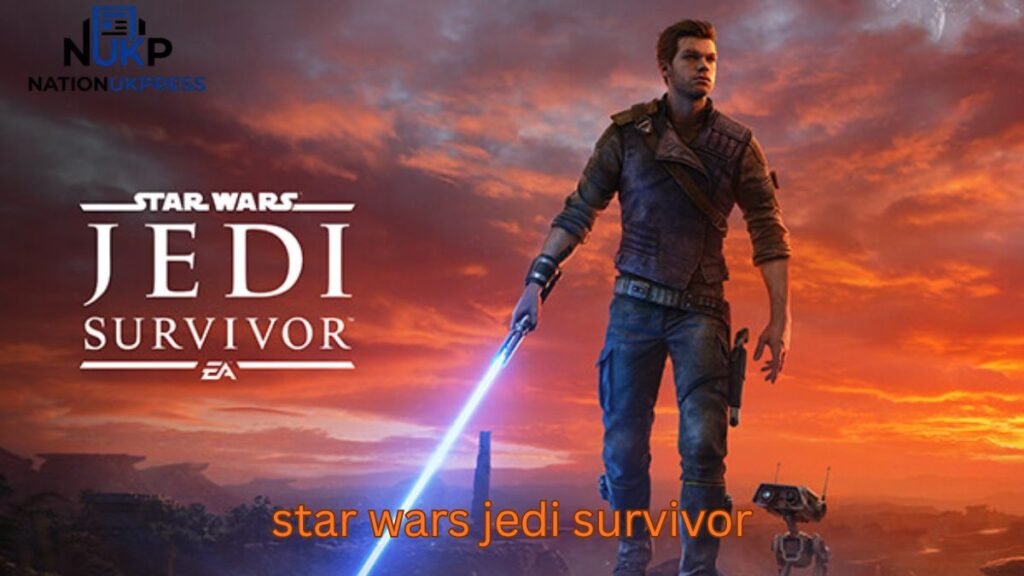

If you’ve been struggling to decide whether to jump into Star Wars Jedi Survivor PS5, or you’re already stuck in its massive open world trying to figure out where to go next, you’re not alone. Star Wars Jedi: Survivor is one of those games that looks straightforward on the surface but quickly turns into a deep, layered experience with combat challenges, exploration puzzles, and a surprisingly emotional story.
Many players start off excited and then hit moments of confusion: “Am I underpowered?”, “Did I miss something important?”, or “Why is this area so hard compared to the last one?” This article solves exactly that. It breaks down the game in a practical, experience-driven way so you can actually enjoy it instead of feeling lost.
You’ll get a clear PS5 performance overview, a grounded walkthrough approach (without spoiling the story), a realistic trophy guide, honest review insights, and advanced tips that most guides don’t explain properly. Whether you’re a completionist or just want to finish the story smoothly, this guide is built to make your journey through Koboh, Jedha, and beyond far more manageable.
Understanding Star Wars Jedi Survivor Basics
At its core, Jedi Survivor builds on Fallen Order but expands everything—combat, exploration, customization, and map complexity.
Core gameplay loop
You typically:
- Explore semi-open planets
- Fight Imperial forces, creatures, and bosses
- Unlock new traversal abilities
- Return to previous areas with new tools
This “Metroidvania-style” design is key. Many players think they’re stuck, but the truth is: you often just need a later ability.
Combat system evolution
The stance system is one of the biggest changes:
- Single blade (balanced)
- Double blade (crowd control)
- Dual wield (high risk, high reward)
- Crossguard (heavy damage, slow timing)
- Blaster stance (hybrid ranged/melee)
A common mistake: sticking to one stance too long. The game is designed for switching based on enemy type.
Star Wars Jedi Survivor PS5 Experience
On PS5, the experience is strong but not perfect. The game offers performance and quality modes, and your choice really changes how it feels.
Performance mode (recommended for most players)
- Smoother combat responsiveness
- Slightly lower visual detail
- Better for boss fights and timing-heavy sections
Quality mode
- Sharper visuals
- More cinematic lighting
- Noticeably lower frame consistency in heavy areas
Unique PS5 insight (not often mentioned)
One subtle but important detail: input latency feels slightly tighter in performance mode even when frame drops aren’t obvious in quality mode. This affects parrying windows more than most players realize. If you’re struggling with combat timing, it may not be skill—it might be mode choice.
Haptics and immersion
DualSense support is subtle but effective:
- Lightsaber hum feedback feels distinct per stance
- Environmental traversal (grappling, climbing) has light vibration cues
- Not overdone, but adds immersion during long play sessions
Walkthrough Approach (Without Spoilers)
Instead of a linear step-by-step walkthrough, the smartest way to progress is to follow a “return loop” mindset.
Early game strategy
- Don’t rush exploration on Koboh
- Focus on unlocking traversal abilities first
- Mark unreachable areas mentally (you will return later)
Mid-game structure
At this point, the game opens up:
- Multiple planets become accessible
- Side paths often hide upgrades or Force echoes
- You should revisit earlier zones frequently
Late game pacing
- Combat difficulty spikes significantly
- Boss fights require stance switching mastery
- Exploration becomes more vertical and puzzle-heavy
Common mistake players make
Trying to fully clear every area on first visit. The game is intentionally designed to punish this mindset. You’ll save hours by accepting temporary incompletion.
Star Wars Jedi Survivor Trophy Guide
The trophy system is heavily tied to exploration and combat mastery rather than pure story completion.
Main trophy categories
- Story progression trophies
- Combat mastery (stances, enemies, upgrades)
- Exploration collectibles (force echoes, chests)
- Mini-games and side content
Easy-to-miss trophy patterns
- Certain enemy types only appear in specific story windows
- Some collectibles become harder to track after story progression
- Optional bosses may not be marked clearly on the map
Unique trophy insight (rarely discussed)
The game subtly encourages “natural replay zones.” Instead of forcing full cleanup at the end, you’ll find that mid-game revisits are actually more efficient than post-game cleanup due to enemy respawn logic and clearer traversal memory.
Efficient platinum strategy
- Finish main story without over-grinding
- Unlock full traversal set
- Return for collectibles in clusters per planet
- Finish combat-related challenges last
Star Wars Jedi Survivor Review (Honest Breakdown)
Combat: 9/10
Combat is the strongest part of the game. Each stance feels meaningful, and enemy AI adapts better than in the previous title. However, occasional camera issues in tight spaces can disrupt flow.
Story: 8.5/10
The narrative is more personal this time. It focuses heavily on Cal Kestis’ internal struggle and relationships. It’s slower in parts but pays off emotionally.
Exploration: 9/10
This is where the game shines. Planets feel layered and interconnected. However, map readability can sometimes create confusion.
Performance: 7.5/10
PS5 runs well overall, but not flawlessly. Occasional frame dips and loading inconsistencies still exist in dense areas.
Overall impression
This is a sequel that respects player intelligence. It doesn’t always guide you clearly—but rewards patience and curiosity.
Advanced Tips Most Players Miss
1. Stance switching is not optional
Enemies are designed around stance counters. If a fight feels impossible, it’s often a stance mismatch, not difficulty.
2. Map confusion is intentional
The map is designed to feel layered, not flat. Vertical paths are often hidden behind traversal upgrades.
3. Healing economy matters more than skill
Stims are limited early on. Many difficult sections are actually resource management tests.
4. Enemy aggression patterns vary by planet
A lesser-known detail: enemy AI behavior subtly shifts depending on environmental density and terrain type.
5. Hidden performance advantage
Performance mode reduces not just visual load but also stabilizes animation timing consistency during boss parries—this affects success rates more than raw FPS numbers suggest.
Common Mistakes Players Make
- Ignoring exploration until post-game
- Sticking to one lightsaber stance
- Over-upgrading cosmetic skills early
- Not revisiting old planets after unlocking abilities
- Fighting optional bosses too early
FAQ
Is Star Wars Jedi Survivor better on PS5 or PC?
The PS5 version is more stable out of the box, while PC can offer higher visuals but depends heavily on hardware. Most players prefer PS5 for consistency.
How long does it take to finish Jedi Survivor?
The main story takes around 20–25 hours. Full completion can take 40–60 hours depending on exploration and trophies.
Is Jedi Survivor harder than Fallen Order?
Yes, slightly. Enemy AI is more aggressive, and boss fights require better timing and stance switching.
What is the hardest trophy in Jedi Survivor?
Most players struggle with exploration-based trophies due to hidden areas and planet revisit requirements rather than combat challenges.
Do I need to play Fallen Order first?
It’s highly recommended. Jedi Survivor continues Cal Kestis’ story and assumes familiarity with previous events and mechanics.
Conclusion
Star Wars Jedi Survivor is not just a sequel—it’s a deeper, more demanding evolution of the Jedi gameplay formula. On PS5, it delivers a strong cinematic experience with only minor technical flaws. The key to enjoying it is understanding its design philosophy: exploration over speed, adaptation over repetition, and patience over rushing.
If you approach it with that mindset, the game becomes far more rewarding. Whether you’re aiming for the platinum trophy or just trying to enjoy the story, Jedi Survivor respects players who engage with it thoughtfully rather than rushing through.